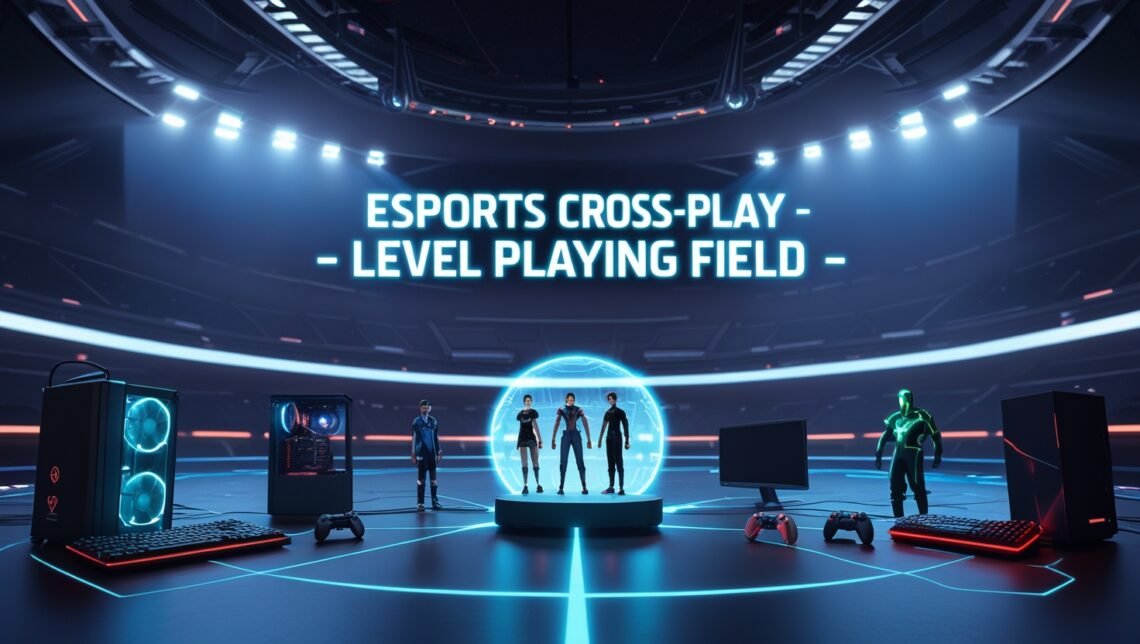
Picture a digital arena where gamers from every device come together on equal footing. Esports Cross-Play is revolutionizing competitive gaming, creating a level playing field that demolishes old barriers and redefines fairness. This article unveils the transformative impact of cross-play in esports and how it’s forging a new era in competitive gaming.
Redefining Competition Through Cross-Play:
The world of esports is evolving rapidly, and cross-play is at the forefront of this evolution. Traditionally, gamers were locked into isolated ecosystems, separated by platform boundaries. Today, however, cross-play dissolves these walls. By allowing players on PCs, consoles, and mobile devices to compete together, esports is transitioning into an environment where skill matters more than hardware.
This shift not only fuels larger player pools and shorter matchmaking times but also elevates the intensity of competitive gaming. No longer are top-tier players confined by system restrictions; they experience a democratized battleground where innovations and strategies emerge from a collective melting pot of ideas. This leveling of competition fosters a culture where every participant can shine, regardless of their device, making the digital coliseum as inclusive as it is exhilarating.
Constructing a Level Playing Field:
One of the primary goals of cross-play initiatives is to establish a level playing field for all competitors. Historically, disparities in hardware performance, control schemes, and network capabilities have created unintended advantages for certain players. By integrating technologies that harmonize these differences, developers now work diligently to ensure that every contestant competes under fair conditions. At its core, a level playing field means that all players, whether gaming with a console controller, a PC keyboard, or a mobile touchscreen, have equal opportunities.
This requires sophisticated software solutions that manage input delays, calibrate graphics fidelity, and standardize gameplay physics. When executed effectively, these technologies remove the traditional barriers and ensure that winning relies on strategy and mastery. The collective effort to bridge platform divides is not only a technical challenge but also a symbolic step toward a unified competitive spirit in esports.
The Technology Behind Seamless Interoperability:
At the heart of esports cross-play is the marvel of technological interoperability. Developers have invested countless hours into creating systems that allow diverse platforms to communicate in real time. This is achieved through robust network protocols, cloud-based gaming engines, and adaptive algorithms that sync gameplay across devices. In essence, interoperability means that gamers are no longer limited by the capabilities of their individual hardware. For instance, the experiences in titans like Fortnite and Rocket League demonstrate how adaptive matchmaking and real-time data synchronization can bring players together seamlessly.
These solutions not only empower a united community but also drive down latency issues and ensure stability across online matches. The fine-tuning of these technological frameworks reinforces that the success of cross-play is as much a feat of engineering as it is a shift in esports culture, ensuring that every match is defined by strategic brilliance rather than technical inequities.
Enhancing Social Connections in Esports:
Beyond technology and fairness, cross-play is reshaping the social fabric of competitive gaming. In a field once divided by exclusive ecosystems, gamers now have the unprecedented opportunity to connect and collaborate regardless of device. This social synergy nurtures community bonds, letting friends team up without the worry of incompatible consoles or disparate gaming systems. Gaming communities thrive on shared experiences, and the ability to interact with a massive, diverse player base has resulted in richer, more vibrant esports narratives.
The cross-pollination of strategies and cultural insights from different gaming worlds fuels innovation and creativity on the virtual battlefield. Moreover, tournaments and leagues that adopt cross-play standards witness a dramatic boost in audience engagement, as spectators enjoy the unpredictable freshness of diverse matchups. This blending of communities not only enlarges the competitive arena but ultimately drives esports toward a future built on collaboration, inclusion, and mutual respect.
Ensuring Competitive Fairness:
A core debate in the arena of cross-play is competitive fairness. Critics point out that varying input methods, such as keyboards and mice versus controllers or touchscreens, might create inherent imbalances. However, innovative solutions are continuously being implemented to address these potential discrepancies. Developers have experimented with input-based matchmaking systems, where players are grouped based on their control methods, or even integrated hybrid systems that adjust game mechanics dynamically.
Such adaptive balancing helps mitigate disparities and ensures that every participant’s skill set is measured on an equal scale. The result is a meticulously calibrated environment where competitive edge is determined by mastery, tactics, and quick thinking rather than technological advantage. As esports continues to embrace cross-platform play, the commitment to fairness remains paramount, ensuring that every match is a true contest of prowess on a level playing field.
Opening New Revenue Streams in Esports:
The shift toward cross-play not only transforms gameplay but also ignites economic opportunities in the esports industry. Creating an open, integrated environment means that game publishers, hardware manufacturers, and streaming platforms can tap into a broader audience. This expansion fuels novel revenue streams through diversified in-game purchases, cross-platform sponsorship deals, and innovative advertising models that appeal to a heterogeneous audience.
Additionally, by uniting various player bases, cross-play enhances the marketability of esports tournaments and leagues. A unified competitive space attracts larger audiences, both in-person and online, driving merchandise sales, ticket revenues, and media contracts upward. The economic dynamism spurred by cross-play initiatives is reflective of a broader trend toward inclusivity and interoperability, a signal that the esports industry is evolving beyond niche markets into a global entertainment powerhouse with boundless potential.
Navigating Technical and Regulatory Challenges:
While cross-play is a promising evolution, its widespread adoption is not without challenges. The journey to seamless cross-platform integration faces numerous hurdles, from technical limitations to regulatory constraints. On the technical front, dealing with different hardware capabilities, network infrastructures, and proprietary software is a complex puzzle. Achieving perfect synchronization in real time demands robust and flexible backend systems that can handle varied data streams.
Meanwhile, regulatory issues such as data privacy, intellectual property rights, and regional compliance add another layer of complexity, calling for cooperation between international stakeholders and local governing bodies. Despite these challenges, the esports industry’s commitment to innovation drives continuous improvements. Collaborative efforts among developers, regulators, and technological innovators are paving the way for solutions that will eventually overcome these hurdles. The path to a genuinely global and integrated esports arena is fraught with challenges, but the profound benefits of a truly level playing field continue to catalyze progress.
Trends Shaping Esports Cross-Play:
Looking ahead, the future of esports cross-play is brimming with potential and promise. Innovations like cloud gaming, blockchain-based solutions for secure transactions, and AI-enhanced matchmaking systems are setting the stage for a more cohesive and dynamic competitive landscape. These emerging technologies are not only enhancing current cross-play experiences but are also creating new possibilities for gameplay, fan engagement, and tournament structures. As the boundaries between platforms continue to blur, tournaments will evolve into even more dynamic and diverse spectacles.
Moreover, continuous improvements in technology are expected to further minimize latency issues and disparities, making competitive gaming an even more immersive experience. With a relentless focus on player experience, community inclusion, and technological breakthroughs, esports is on the cusp of a new era where cross-play is not just a feature but a fundamental pillar of competitive gaming. This momentum will undoubtedly continue to redefine what it means to have a truly level playing field in esports.
Conclusion:
In today’s competitive gaming landscape, esports cross-play is proving to be a game-changer, uniting players, balancing competition, and opening up economic opportunities. With its blend of groundbreaking technology, social synergy, and a steadfast commitment to fairness, cross-play is forging a future where every gamer has the chance to shine.
FAQs:
1. What is esports cross-play?
It allows gamers on different platforms to compete together in the same environment.
2. How does cross-play create a level playing field?
It minimizes hardware disparities and standardizes gameplay for fair competition.
3. Why is community important in cross-play esports?
It unites diverse players, enriches experiences, and strengthens social connections.
4. What technological advancements support cross-play?
Innovations like cloud gaming, adaptive matchmaking, and real-time synchronization are key.
5. How do developers ensure fairness across different inputs?
They implement adaptive balancing and input-based matchmaking systems.
6. What does the future hold for esports cross-play?
Expect more integration, enhanced technology, and broader global participation.